
Sharp, sudden pain from an ice-cold drink, a hot cup of coffee, or even a rush of cold air isn’t something you have to just live with. If it happens often enough that you’ve started avoiding certain foods and drinks, that’s your teeth telling you something — and it’s worth listening to.
What’s Actually Happening
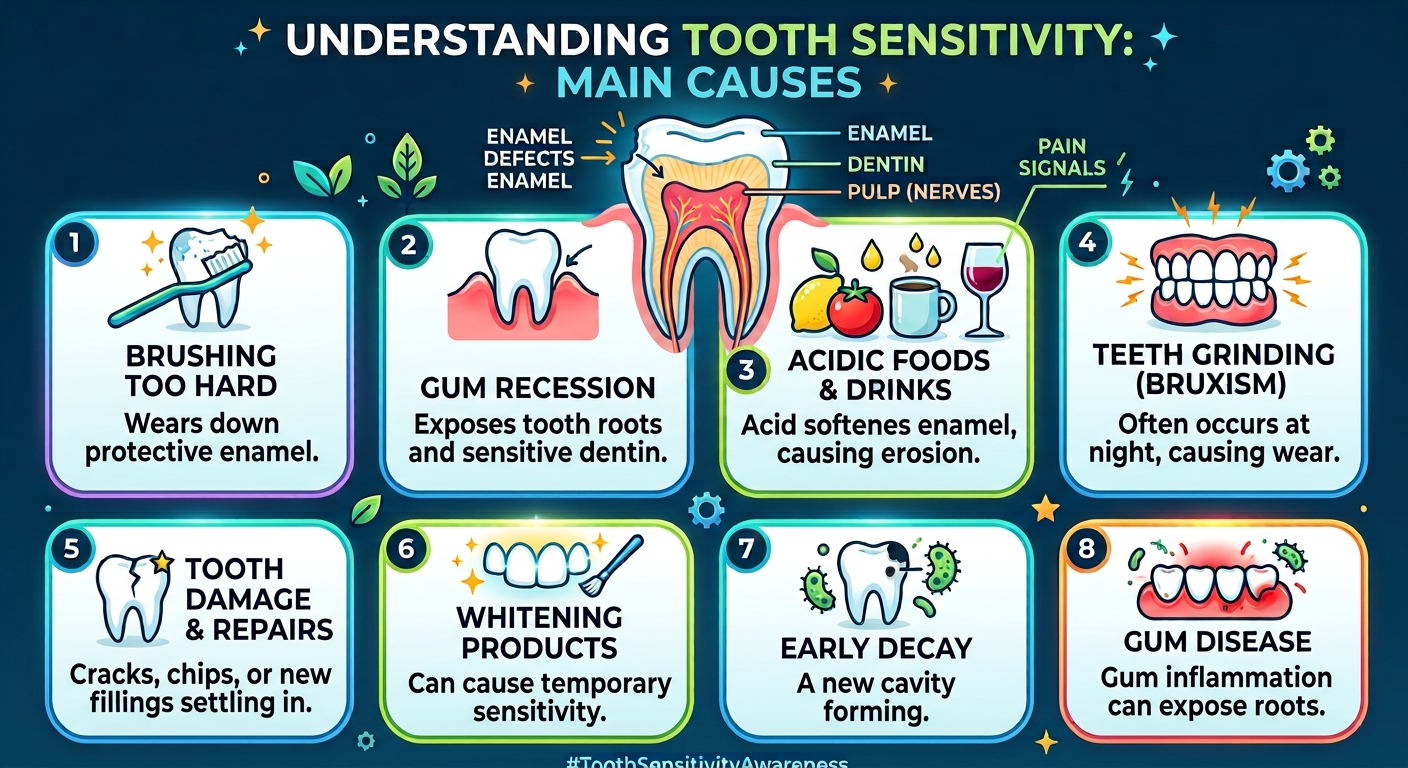
Underneath your tooth enamel is a softer layer called dentin, and dentin is full of microscopic tubes that lead straight to the nerve at the center of your tooth. When enamel wears thin, or your gums recede and expose the tooth root (which has no enamel covering it at all), those tubes are left open. Cold, heat, sugar, and even acidic foods can reach the nerve directly — and that’s the sharp zing you feel.
Common Causes
A few things tend to be behind it:
- Worn enamel from brushing too hard or using a hard-bristled toothbrush
- Gum recession, which exposes the root surface
- Acidic foods and drinks — citrus, tomatoes, coffee, wine — that gradually soften enamel
- Teeth grinding (bruxism), often at night without realizing it
- Cracked or chipped teeth, or a recently placed filling or crown still settling in
- Teeth whitening products, which can cause temporary sensitivity
- Early tooth decay or a cavity starting to form
- Gum disease, which can expose roots the same way recession does
Sometimes it’s one of these. Sometimes it’s a combination — which is exactly why guessing at home usually doesn’t fix it for good.
What Happens If You Wait
Occasional mild sensitivity isn’t an emergency. But sensitivity that’s getting worse, lingers well after the cold or hot trigger is gone, or is limited to one specific tooth is a different story — that pattern can point to a cracked tooth, a cavity, or a problem under an old filling that’s only going to get more involved (and more expensive) the longer it’s left alone. What starts as “ouch, that was cold” can turn into a root canal or extraction if the underlying cause goes untreated. Sensitivity is often the easiest, cheapest stage to catch a problem — it’s usually much harder to ignore your way past it than to just get it looked at.
How We Treat It
Treatment depends entirely on what’s actually causing it, which is why a quick exam makes a real difference:
In the office, we might:
- Apply a fluoride varnish or a dentin sealant directly to the sensitive area to block the exposed tubes
- Place a small bonding restoration over an exposed root or worn spot
- Treat any gum recession or gum disease at the source
- Fit you for a nightguard if grinding is the culprit
- Address a cavity, crack, or old filling that’s actually the real problem
At home, we’ll often recommend:
- Switching to a soft-bristled toothbrush and a gentler brushing technique
- A desensitizing toothpaste for daily use
- Cutting back on acidic foods and drinks where possible
Most patients feel a noticeable difference within days of starting the right treatment — the key word being right, since a $6 tube of toothpaste from the store won’t help much if the real cause is a crack or a cavity.
Frequently Asked Questions
Is tooth sensitivity always a sign of a cavity?
No. It’s often enamel wear, gum recession, or grinding — but a cavity is common enough that it’s always worth ruling out, especially if the pain is coming from one specific tooth.
Will desensitizing toothpaste actually fix it?
It can help with mild, general sensitivity, especially from enamel wear. It won’t fix a crack, an exposed root that needs bonding, or a cavity — those need an actual dental treatment.
Why did my teeth get sensitive after whitening?
Whitening products can temporarily open the pores in enamel, which usually settles down within a few days. If it doesn’t, or if it’s severe, it’s worth having us take a look.
Is sensitivity to hot different from sensitivity to cold?
Sometimes. Cold sensitivity that fades quickly is often just enamel wear or recession. Pain from heat, or pain that lingers well after the trigger is gone, can point to a deeper issue like an infected nerve — that one’s worth getting checked sooner rather than later.
Can grinding at night really cause this?
Yes, and it’s one of the most common causes we see. Grinding wears down enamel over time, often without the person realizing they’re doing it until sensitivity shows up.
How soon should I come in?
If it’s mild and occasional, mention it at your next routine cleaning. If it’s getting worse, keeps you up at night, or is isolated to one tooth, don’t wait — call us.
Come See Us
Tooth sensitivity is one of those things that’s easy to work around for a while — skip the ice water, chew on the other side — until it isn’t. We’ll help you find the actual cause and the right fix, not just a temporary workaround.
Island Dentists is open Monday–Friday, 9:00 AM–4:00 PM, with alternating Saturday hours from 8:00 AM–1:00 PM. We accept most dental insurance plans, including Medicare Advantage, and offer financing through CareCredit and Cherry. New patients welcome.
📍 1023 St Johns Ave, Palatka, FL 32177
📞 (386) 385-3700 | island-dentists.com